Nellikkai: The Tamil Fruit of Long Life
Nellikkai: The Tamil Fruit of Long Life
✎ Mauritius Tamil◷ 27 October 2026
Nellikkai: The Tamil Fruit of Long Life
Oct 27, 2026 · @K.C
Nearly two thousand years ago, a Tamil king held a fruit said to grant long life — and gave it away to a poet. That fruit was the nellikkai, and its story still speaks to Tamils everywhere, from Thanjavur to Port Louis.
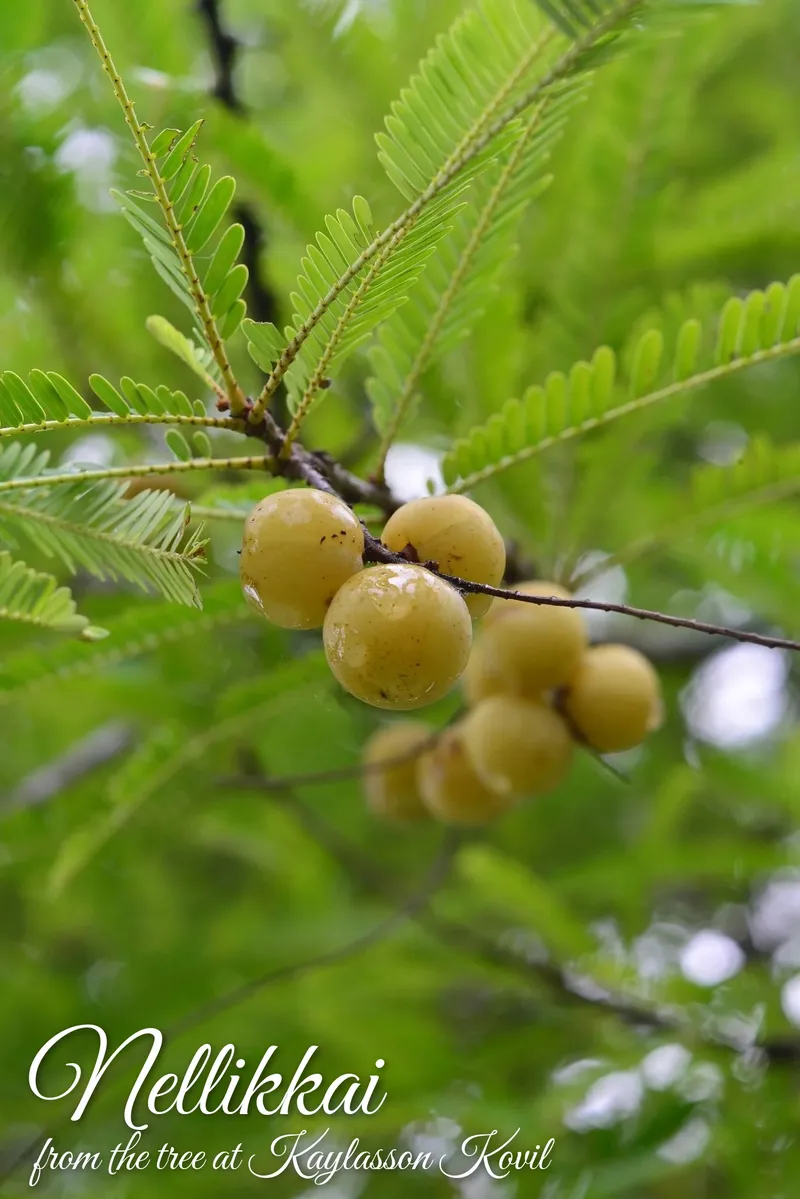
The nellikkai (Indian gooseberry, amla; botanical name Phyllanthus emblica) is a small, pale-green, sour fruit. Today it is sold worldwide as a "superfood" and is usually labelled Ayurvedic. Yet Tamil literature and Siddha medicine hold some of the oldest and richest records of this fruit. This article traces nellikkai through classical Tamil poetry and the Siddha healing tradition. It also places that heritage fairly beside other traditions and modern science, so that readers in Mauritius and across the Tamil diaspora can speak about it with confidence and accuracy.
A king, a poet and the fruit of long life
The best-known nellikkai story comes from the Purananuru, an anthology of 400 heroic poems from the Sangam period. Scholars broadly date Sangam literature to between 100 BCE and 250 CE (Wikipedia: Sangam literature). Athiyaman Neduman Anji was a Velir chieftain who ruled Mazhanadu, around present-day Dharmapuri, Krishnagiri and Salem, from his capital at Thagadur (Wikipedia: Athiyaman Neduman Anci). A nelli tree grew in the forests of Kanchamalai in his realm, and its fruit was believed to give a longer, healthier life (Wikipedia: Last seven great patrons). Athiyaman obtained this rare fruit. He did not eat it. He gave it to the poet Avvaiyar, because he believed her wisdom and her voice for Tamil mattered more than his own life (Wikipedia: Avvaiyar).
Avvaiyar answered with Purananuru 91, titled Emakku Eeththanaiye ("You gave it to us!"). Its closing lines read:
சிறியிலை நெல்லித் தீங்கனி குறியாது, ஆதல் நின்னகத்து அடக்கிச், சாதல் நீங்க, எமக்கு ஈத்தனையே. Without thinking of the sweet fruit of the small-leaved nelli for yourself, keeping its power hidden in your heart, you gave it to me so that I might escape death. Three details stand out. The poet calls the tree small-leaved (siriyilai), an accurate botanical description of its fine, feathery leaves. She calls the fruit sweet (theenkani), recalling the sweetness that follows nellikkai's sour first taste. And she links it directly to long life and escape from death, the same idea Siddha medicine would later build upon.
Remembered through the centuries
Athiyaman's gift made him one of the Kadai Ezhu Vallalgal, the "last seven great patrons" of ancient Tamilakam. The seven are Pari, Pegan, Kari, Ori, Aay, Athiyaman and Nalli (IRJT: The Generosity of the Seven Donors).
The Sangam poem Sirupanatruppadai, by Nallur Naththathanar, honours these seven patrons and their famous deeds (Wikipedia: Sirupanatruppadai). Athiyaman's gift of the nelli to Avvai is remembered among them. The poet Ponmudiyar also praised Athiyaman, the king known for this gift (Wikipedia: Ponmudiyar). The story has never left Tamil memory. It is taught to schoolchildren, retold on stage and in film, and recalled whenever Tamils speak of true generosity. For many Tamils, nellikkai is not just a fruit; it is a symbol of a ruler who valued knowledge above his own life.
Nellikkai in Siddha medicine What Purananuru expresses in poetry, the Siddha tradition turns into medicine. Siddha is the classical healing system of the Tamil people, traditionally traced to the eighteen Siddhars and written in Tamil. • Kaya karpam. Siddhars placed nellikkai among the karpa herbs, believed to strengthen the body and slow ageing. This is a direct echo of Avvaiyar's "escape from death." • Thiripalai. Nellikkai is one of the three fruits of Thiripalai, with kadukkai and thanrikkai. It is one of the most widely used Siddha formulas. • Gunapadam. Siddha texts on the properties of medicinal substances describe nellikkai as cooling and beneficial for the eyes, hair, blood and digestion. • Preparations. Common forms include nellikkai lehyam, medicated hair oils, chooranams and the fresh fruit preserved in salt or honey.
In Tamil homes, the same knowledge lives on informally. Amay or Apaye still recommend nellikkai for heat in the body, for the hair and for the eyes, often without knowing they are passing on Siddha teaching.
One fruit, many traditions
Nellikkai is today often presented only as an "Ayurvedic" herb. That label tells only part of the story. It is true that the classical Sanskrit medical texts value the fruit highly. There it is called āmalaka or dhātrī. The Charaka Samhita ranks it among the finest rejuvenating herbs, Ayurveda's Triphala parallels Siddha's Thiripalai, and the well-known Chyavanprash is built around it. These texts are in Sanskrit, not Hindi, which is a much later language. The tree itself belongs to no single people. Its native range spans South and Southeast Asia, including India, Sri Lanka, Nepal and southern China (USC Plants & People). Communities across this region discovered its value in their own languages.
The fair conclusion is clear. Siddha is an independent Tamil system, not a regional branch of Ayurveda, and its relationship with nellikkai is documented in Tamil from the Sangam age onward. Recognising this does not require denying other traditions. It simply means Tamil knowledge should be named and credited as Tamil.
What modern science says
Modern research supports the old reputation, with some caution. A 2022 review in the journal Antioxidants reports that nellikkai is rich in polyphenols and vitamin C, with 193 to 720 mg of vitamin C per 100 g of fresh fruit depending on the variety (Gul et al., 2022). That is far more than apples, limes or pomegranates. The same review notes antioxidant, anti-inflammatory, blood-sugar-lowering and cholesterol-lowering effects in animal and human studies. Many of these findings are early, and larger clinical trials are still needed. Nellikkai may also reduce blood clotting, so people on blood-thinning medicines should speak to a doctor before taking concentrated amla supplements (News-Medical).
The Siddhars could not measure vitamin C. But their observation that nellikkai protects and renews the body is consistent with what laboratories are finding today.
Why it matters for Tamils in Mauritius and the diaspora
Tamils who came to Mauritius from the nineteenth century onward carried more than their language and temples. They carried knowledge of plants, food and healing, much of it rooted in the same Siddha and Sangam heritage described here.
For a diaspora community, such knowledge is easily lost or relabelled. When nellikkai appears on shop shelves only as an "Ayurvedic" product, the Tamil contribution quietly disappears. Knowing Purananuru 91 and the place of nellikkai in Siddha gives younger Mauritian Tamils a way to reclaim that history with evidence, not slogans. The story of Athiyaman and Avvaiyar also carries a value that travels well: knowledge and those who carry it deserve to be honoured above wealth and power.
Conclusion
Nellikkai has a Tamil history that is old, documented and continuous. A Sangam poem links it to long life nearly two thousand years ago, and Siddha medicine has used it ever since. Other traditions value the fruit too, and that is no threat to this heritage. What matters is that the Tamil chapter of the nellikkai story is told, credited and remembered, as Avvaiyar ensured it would be. Sources and further reading • Avvaiyar (Sangam poet) – Wikipedia • Athiyaman Neduman Anci – Wikipedia • Last seven great patrons – Wikipedia • Sirupanatruppadai – Wikipedia • Ponmudiyar – Wikipedia • Sangam literature – Wikipedia • Purananuru 91 text – Karka Nirka • Rasambal, V. The Generosity of the Seven Donors and the Sirupanatruppadai – International Research Journal of Tamil • Gul, M. et al. (2022). Functional and Nutraceutical Significance of Amla. Antioxidants 11(5): 816 • Amla Health Benefits – News-Medical • The Wonder Berry: Phyllanthus emblica – USC Plants & People This article is for cultural and educational purposes and is not medical advice.
Published 27 October 2026 · www.mauritiustamil.com