VANAKKAM MAURITIUS
The Tamil world opened its summit here — a history lesson nobody expected 13th World Tamils Economic Conference and Global Economic Summit 2026 •
✎ Poulaven◷ 12 September 2026
Vanakkam, Mauritius
The Tamil world opened its summit here — with speeches at 5.30, and a history lesson nobody expected 13th World Tamils Economic Conference and Global Economic Summit 2026 • Atal Bihari Vajpayee Institute, Réduit • opening ceremony
Vanakkam was the word you heard most at Réduit on Friday evening. It was said in many accents.
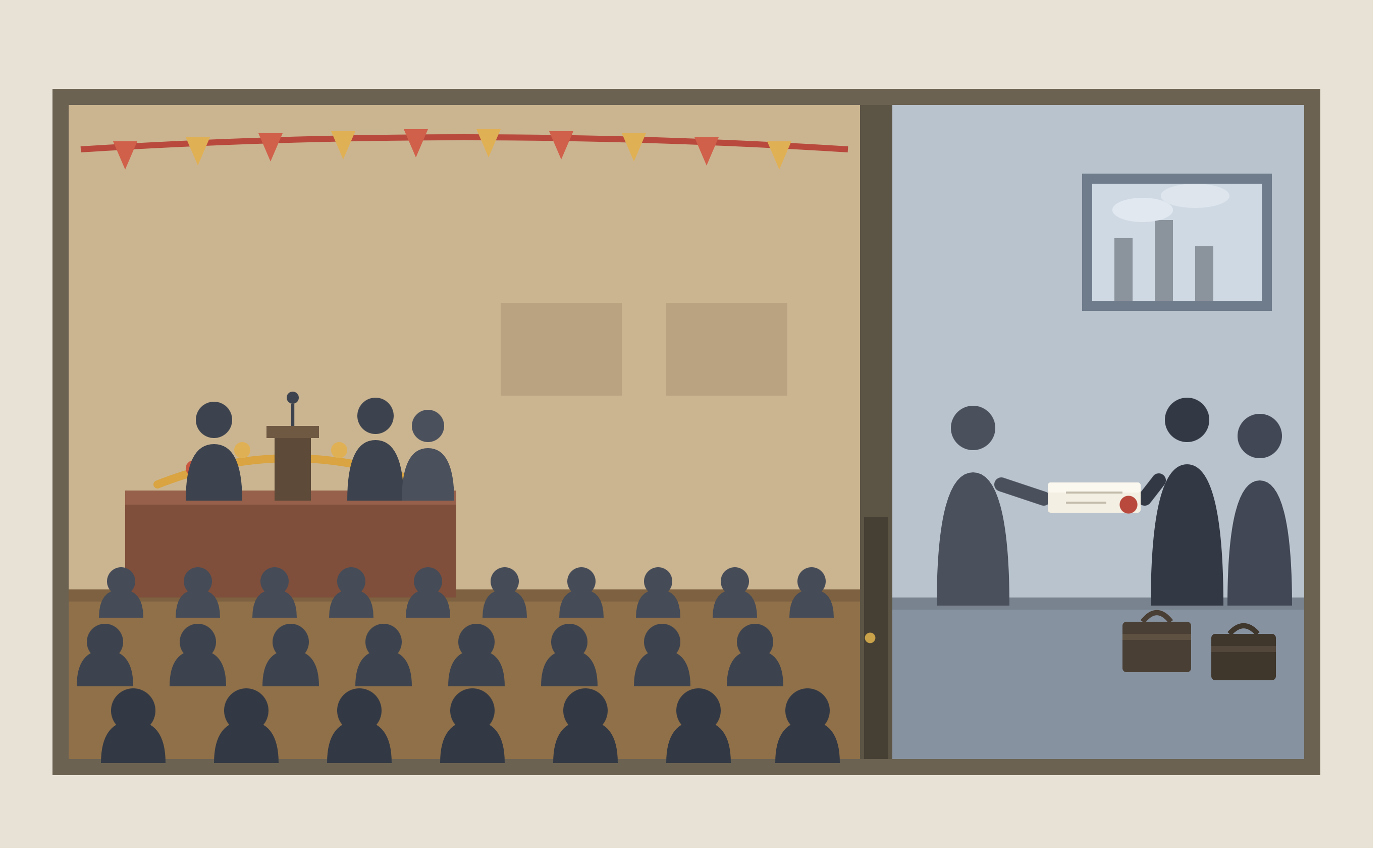
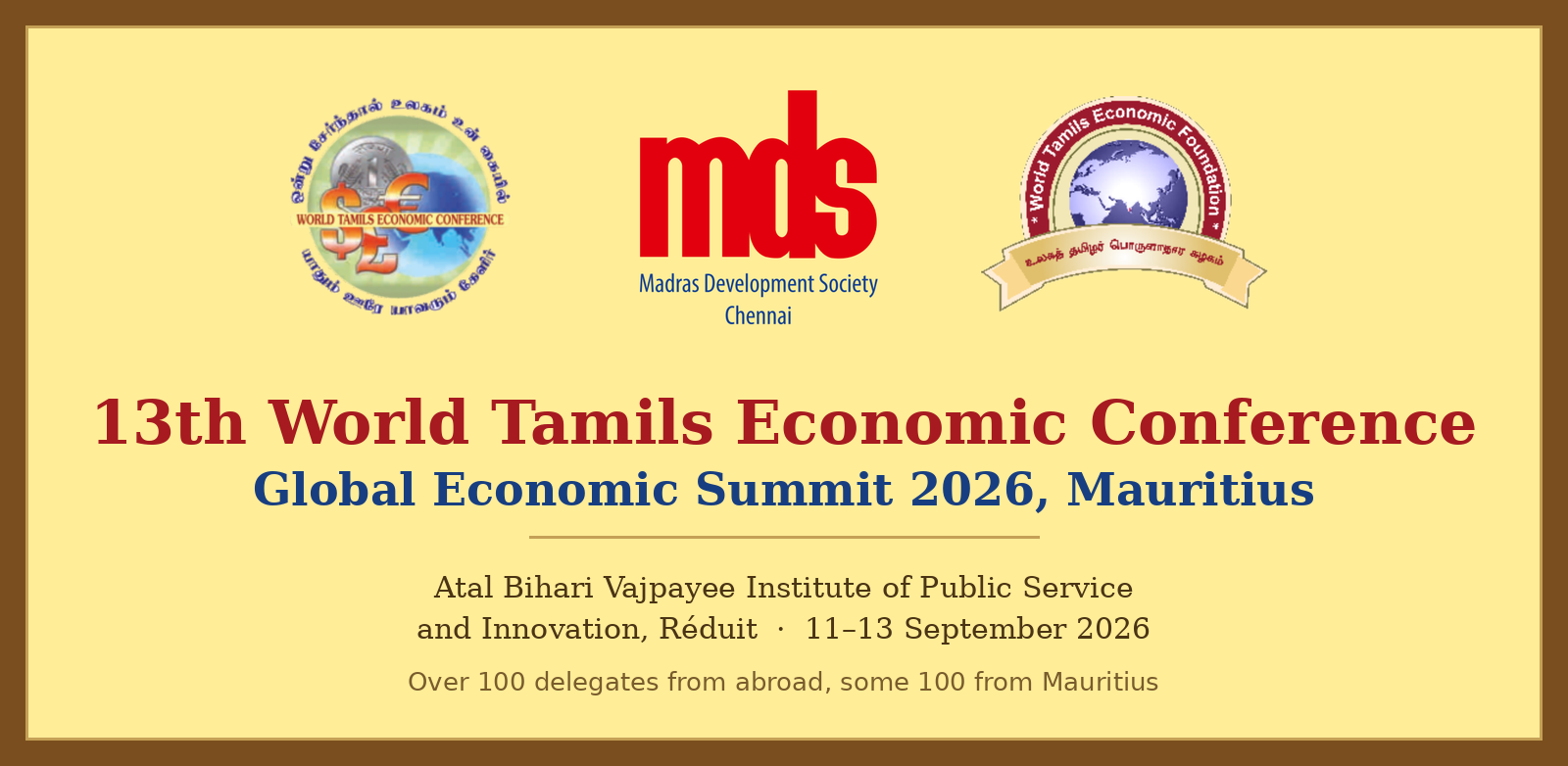
The 13th World Tamils Economic Conference and Global Economic Summit 2026 opened at the auditorium of the Atal Bihari Vajpayee Institute. The programme began at 5.30 p.m. with the speeches. At 7.30 the cultural show took over, and the evening closed at 8.30. More than a hundred delegates have come from abroad, from over ten countries, and about a hundred Mauritians joined them. Two hundred people in one hall, most of them meeting for the first time. It was a good opening for Mauritius. The man behind it The summit is organised by the Madras Development Society and the World Tamils Economic Foundation, both based in Chennai, and both led by Dr V.R.S. Sampath. Bringing this conference to a small island is not easy. Earlier editions were held in Chennai, Dubai, Durban, Kuala Lumpur and Washington. Mauritius is the smallest host so far. Dr Sampath and his team made it happen. Special support from Mauritius The event also benefited from the special support and collaboration of Mr. Jensen Tayelamay, Managing Director of the Tayelamay Group in Mauritius. His contribution was important to the success of this event, and the organisers acknowledge it with gratitude.
Who was on the platform The Prime Minister and the President were not able to attend. But the State was well represented. Vice-President Robert Hungley was present. Rajen Narsinghen, Deputy Minister of Foreign Affairs, Regional Integration and International Trade, gave one of the main addresses. It was he who announced in Washington last October that Mauritius would host this edition. He made the promise, and he kept it. He spoke about Mauritius as a bridge between India and Africa. Dhaneshwar Damry, Junior Minister of Finance, spoke about the opportunities open to business. He set out how he and Mr Narsinghen, who holds international trade, intend to work together to help companies here do business in Africa. Between the two of them sits most of what an investor needs: the finance side and the trade side, saying the same thing on the same platform. Ajay Gunness, Minister of National Infrastructure, was present, and so was the Ministry of Arts and Culture. The Deputy Government Whip, Mr Venkatasamy, also attended. Mr Nagalingum spoke about our history — how our people came to this island, and what they built once they were here. Minister Lutchmanah Pentiah spoke about the link with India across the generations: the uravu, the kinship, that has held for three hundred years. Mr Paramasiven Vyapooree also addressed the ceremony.
One line that ran through the evening Again and again, across speeches and in different accents, one line kept returning: Yaadhum Oore Yaavarum Kelir --- "every place is our home, and every people our kin. The words come from the Purananuru, one of the great classical anthologies of Tamil literature, composed some two thousand years ago. They were written by the poet Kaniyan Pungundranar, and they are among the most quoted lines in the Tamil language, a declaration that the whole world is one family, that no land is foreign and no person a stranger. For a hall holding delegates from South Africa, Réunion, Malaysia and Tamil Nadu, alongside Mauritians whose ancestors crossed the same ocean, the verse carried more than literary weight. It was a statement of what the Tamil world has always believed about itself, and a reminder that a small island in the Indian Ocean belongs to that world as fully as any capital.
Kaniyan Pungundranar is often described as one of the earliest voices of universal brotherhood in world literature, and the line has travelled far beyond Tamil Nadu, quoted at the United Nations, inscribed on public buildings, and taught to schoolchildren across the diaspora. To hear it spoken at Réduit, in a hall where four continents were represented, was to hear a two-thousand-year-old idea still doing its work. It was fitting that the verse kept returning in speeches about trade and partnership. The conference is, after all, an economic one, investment, contracts, networks. But the line supplied the reason underneath the business: that Tamils gather not because they must, but because they recognise one another. Tamil Nadu sent the right minister From Tamil Nadu came A. Rajmohan, Minister for School Education, Tamil Development and Information. Look at that portfolio. He holds schools, and he holds Thamizh itself. The same minister looks after the children and the language. For a community like ours, that is the right combination. Our question was never only whether we can do business with Tamil Nadu. It is whether our grandchildren will still have the thaai mozhi — the mother tongue — when they do. And here was Tamil being used for business, not only for the temple. Our young people should have seen that. A language you can sign a contract in is a living language.
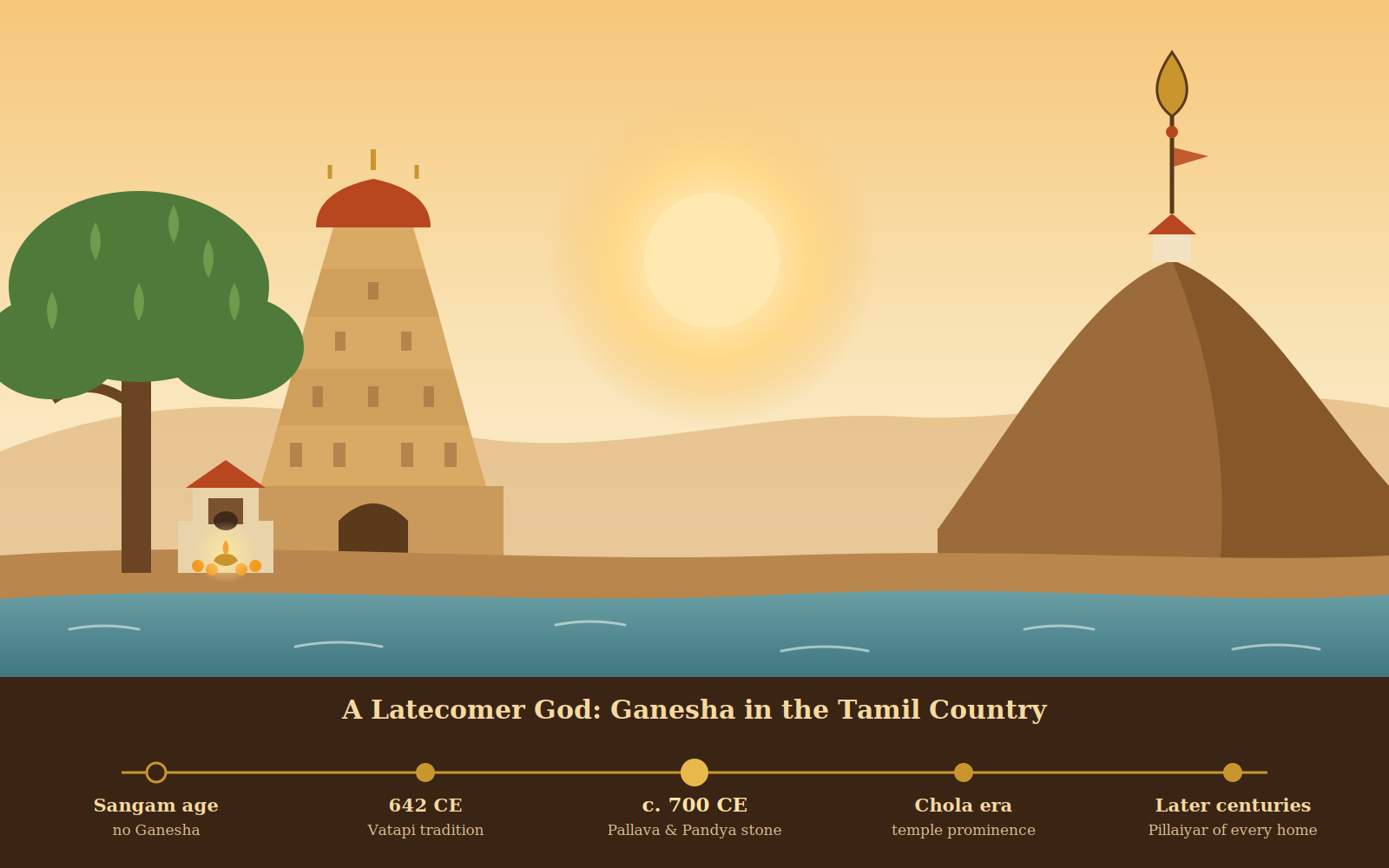
The speech of the evening The address people talked about afterwards came from the Indian High Commissioner, Anurag Srivastava. He spoke about Tamil culture, and about Cavadee — our Thaipoosam Cavadee, the festival this island observes as a public holiday, the day the whole country sees what our community carries. And he made a point that too many Mauritians still do not know. The Tamils did not arrive here with indentured labour. They came in 1727, a full hundred years before the first indentured ships, as craftsmen and artisans, and they helped build this country from its earliest days. To hear that said from the platform, by India’s own representative, was worth the evening on its own. It was an excellent speech.
Then the cultural show At 7.30 the Mauritius Tamil Temples Federation took over the hall. Something happens when Tamils perform for other Tamils. Nothing has to be explained. Nobody needed a programme note. The guests from South Africa, Réunion and Malaysia come from families with stories close to ours — the crossings, the estates, the small temples, the grandmothers who refused to forget. The MTTF had nothing to sell. It simply showed what this island has kept, three hundred years on. The delegates understood. Several of them said the same thing afterwards: they did not expect Mauritius to feel so much like home.
Delegates from everywhere Karthi Mootoosamy has come from South Africa, with the Tamil Business Warriors. Joelle Narayanin has come from Réunion, our closest neighbour. Param has come from Malaysia, home to one of the oldest Tamil business communities outside India. From Tamil Nadu came a large delegation, including the Member of Parliament for Chidambaram. That name means something in our families. Our people carried the memory of Thillai across the sea with them, and built small temples here in its image. Dr Sankar, who works in acupuncture, drew a steady stream of interested visitors. Thiru Siddique, IAS, came from the state’s Ministry of Finance. They were happy. That was clear. Nobody rushed for the door when the speeches ended. Cards were exchanged, then phone numbers. The person who held it together Every event of this size has one person who makes the joins invisible, and at Réduit it is Ms Ananya Krishnan, who serves with the Government of Tamil Nadu. She coordinated between the foreign organisers, the visiting delegations and the Mauritian team. The programme started, the guests were where they needed to be, and the evening looked effortless from the floor, which is the surest sign that it was not. Part of the reason is that she is not a stranger here. Ms Krishnan has built long and warm relations with the Tamils of Mauritius over the years. When the person holding the two ends of a conference already knows both sides, a great deal of friction simply never occurs. That is professional work of a high order, and it deserves to be said plainly. Instrumental coordination from Mauritius The coordination of Mr Coomarah Chengan, from Mauritius, was instrumental for this event. His work behind the scenes helped bring the different sides together and ensured that the arrangements held from start to finish.
What comes next
The programme continues today with a further set of sessions, and closes tomorrow with the final sessions. Conferences of this kind are judged, fairly, on what is still standing six months later. The organisers know it: the aim is partnership, not speeches. The real work starts when the delegates go home. But the opening was solid. More than a hundred delegates from abroad, and as many Mauritians there to meet them. The State turned out. Tamil Nadu sent a minister and a finance officer. Mauritius made its case in front of people with money to invest, then fed them, then showed them who we are. To Dr Sampath and his team, and to the MTTF: nandri.
Vaazhga valamudan — may you live in abundance.
Published 12 September 2026 · www.mauritiustamil.com